
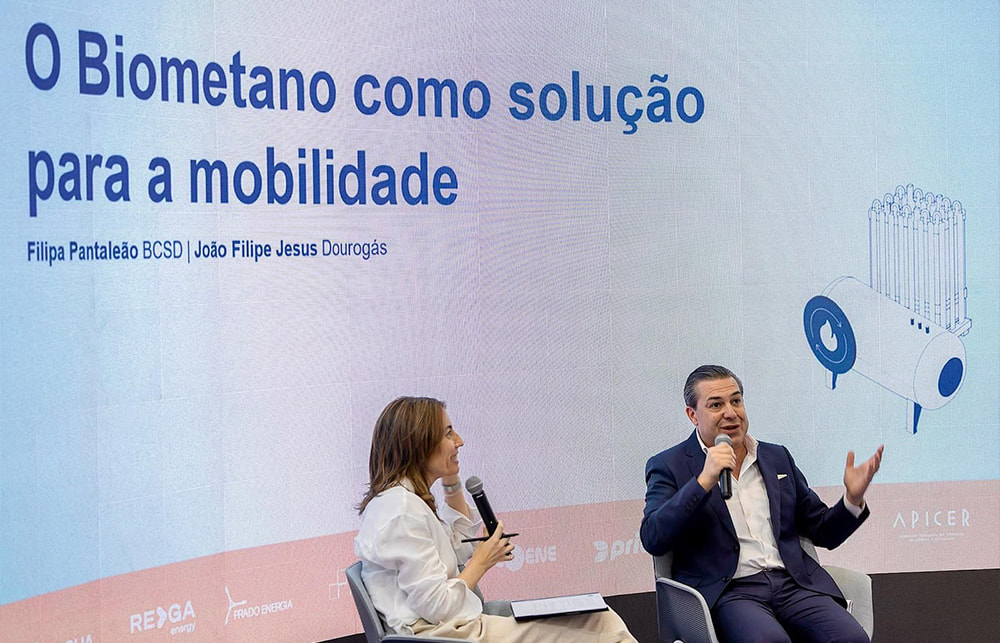
Dourogás took part in the Biomethane Village, an initiative organised by Floene during the 2026 National Agriculture Fair in Santarém, which placed biomethane at the centre of the debate on energy transition and decarbonisation in Portugal.
The event brought together companies, producers, public entities, experts and representatives from the energy sector, encouraging knowledge-sharing and discussion around the opportunities for developing renewable gases in the country.
During the initiative, João Filipe Jesus, CFO of Dourogás, joined a discussion moderated by Filipa Pantaleão, Secretary-General of BCSD Portugal – Business Council for Sustainable Development. The session focused on the contribution of biomethane to more sustainable mobility, particularly in heavy-duty transport.
In a sector where electrification still faces technical and operational limitations, biomethane stands out as a renewable solution capable of contributing immediately to emissions reduction. Its compatibility with existing vehicles and infrastructure makes it possible to accelerate fleet decarbonisation while maintaining the efficiency and operational capacity required by businesses.
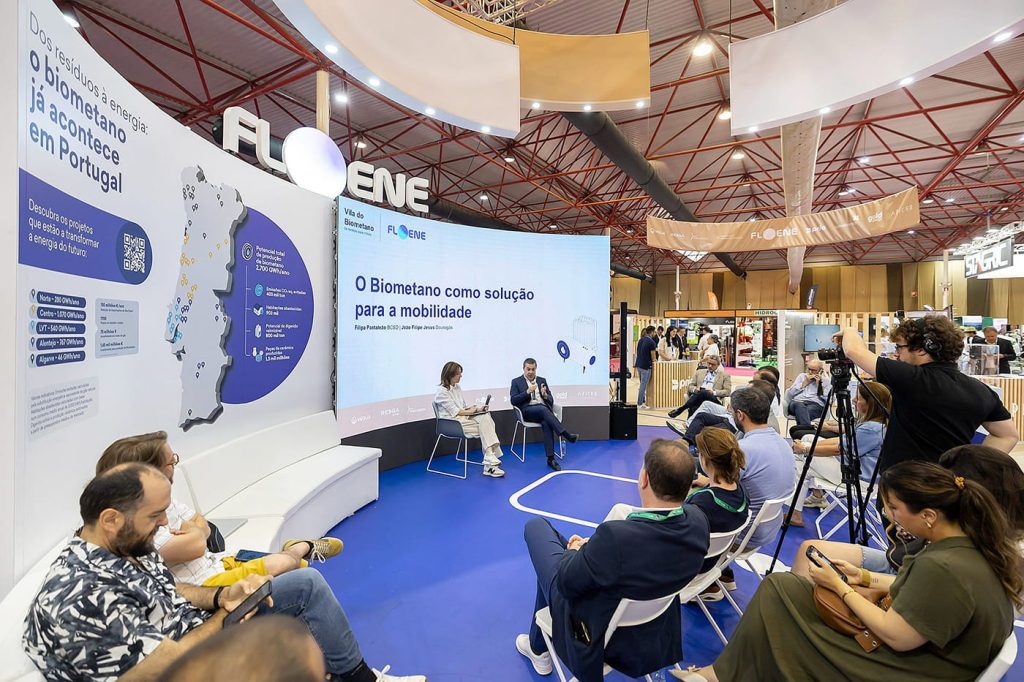
The discussion also highlighted the importance of implementing the measures set out in the Biomethane Action Plan, creating the regulatory and economic conditions needed to support new projects and unlock Portugal’s existing potential.
The use of resources produced across different regions was another key topic. The involvement of municipalities, intermunicipal communities and Regional Coordination and Development Commissions will be essential to developing projects capable of transforming waste and local raw materials into renewable energy, while also promoting the circular economy and greater energy independence.
Participation in the Biomethane Village reinforces Dourogás Renewable’s position in the development of renewable energy solutions and in the creation of a biomethane value chain in Portugal. Cooperation between companies, public entities, producers and local communities will be crucial to turning the potential of this resource into concrete projects and accelerating the transition towards a low-carbon economy.